
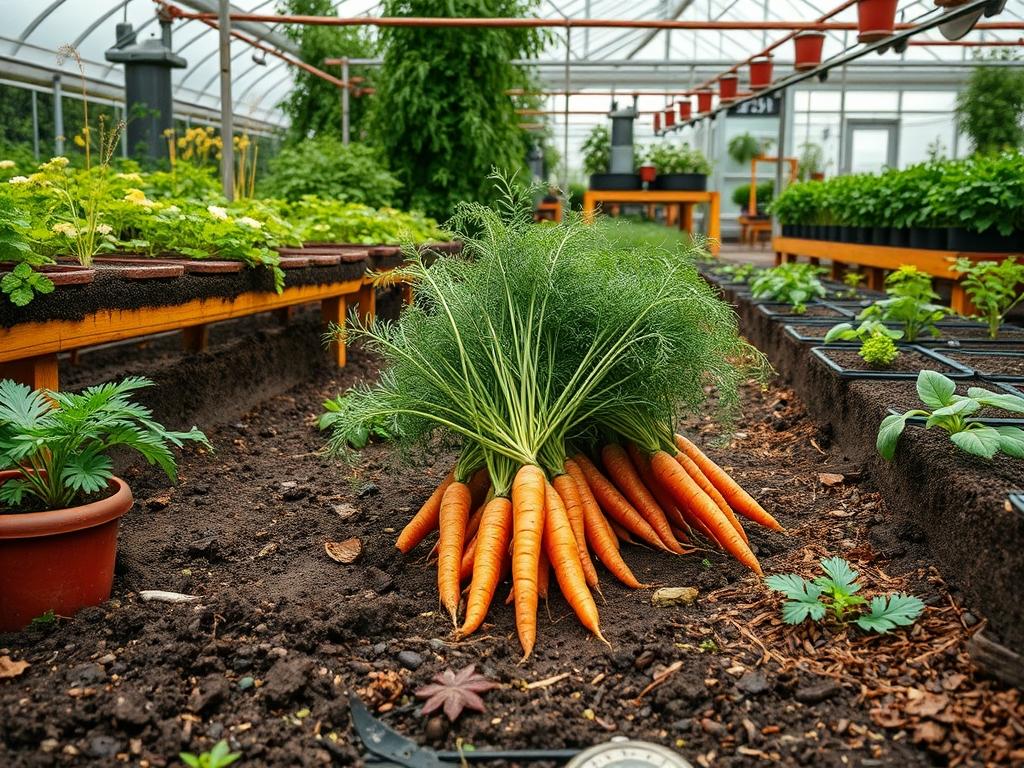
Achieving a seamless integration between aesthetic curb appeal and functional food production requires a nuanced understanding of soil mechanics and site grading. Direct sowing carrots represents one of the most technical challenges for a landscape consultant because it demands specific subterranean conditions that often conflict with traditional ornamental aesthetics. While a lush lawn or a tiered flower bed provides immediate visual gratification, the structural integrity of an edible landscape depends on what lies beneath the surface. For carrots to develop their signature long, straight profiles, the soil must be prepared as carefully as a foundation for a retaining wall. In many residential landscapes, the primary challenge is soil compaction, often a byproduct of heavy machinery used during home construction. This density prevents taproots from penetrating deeply, leading to stunted or “forked” growth that diminishes both the outdoor functionality and the harvest quality.
Strategic garden planning must account for the local climate and the unique microclimates existing within a single property. For instance, a south-facing slope might offer the heat necessary for rapid germination, but it also increases the rate of evaporation, which can be fatal to delicate carrot seeds. Conversely, a low-lying area might suffer from poor drainage, leading to root rot. A professional approach to direct sowing carrots involves analyzing these environmental variables to determine the optimal placement for garden beds. By treating the carrot patch as a fundamental element of the landscape design rather than an afterthought, we can ensure that the garden contributes to the overall greenery while providing a high-yield, high-quality harvest. This requires a shift in perspective; we are not just planting seeds, we are engineering a biological system that rewards precision and patience.
Landscape Design Principles
Incorporating carrot beds into a professional landscape design requires an eye for symmetry and focal points. We often utilize raised beds constructed from cedar or natural stone to create defined borders that separate the vegetable production zone from ornamental shrubs. This elevation serves two purposes. First, it provides a Controlled Environment for the soil, allowing us to bypass the heavy clay or rocky subsoil common in many regions. Second, it adds vertical interest to the landscape, creating layers of texture. We recommend a minimum height of 12 inches for these beds to accommodate the deep-reaching taproots of varieties like Imperator.
Visual balance is achieved by framing these beds with natural stone walkways or paver paths. This ensures that the functional areas of the garden remain accessible even in wet weather, preventing soil compaction from foot traffic. Irrigation planning is another critical design principle. For direct sowing carrots, frequent but shallow watering is required during the first 14 days. We often design a dedicated drip irrigation system with pressure-compensated emitters or micro-sprayers. This minimizes water waste and ensures that the seeds remain hydrated without being washed away by high-pressure hoses. Furthermore, integrating native plants as a perimeter around the carrot beds can attract beneficial insects, creating a self-sustaining ecosystem that reduces the need for chemical interventions.
Plant and Material Selection
Choosing the right carrot variety and companion materials is essential for a successful landscape installation. The table below outlines the specifications for common carrot types and their structural companions.
| Plant Type | Sun Exposure | Soil Needs | Water Demand | Growth Speed | Maintenance Level |
| :— | :— | :— | :— | :— | :— |
| Nantes Carrot | Full Sun | Sandy Loam | Moderate | 65 to 75 Days | Medium |
| Imperator Carrot | Full Sun | Deep, Loose | High | 80 to 90 Days | High |
| Chantenay Carrot | Partial Sun | Heavy or Clay | Moderate | 70 to 80 Days | Low |
| Marigolds | Full Sun | Well-Drained | Low | 50 to 60 Days | Low |
| Chives | Full or Partial | Rich Loam | Moderate | Perennial | Low |
| Radishes | Full Sun | Standard Loam | Moderate | 25 to 30 Days | Very Low |
In addition to the plants themselves, the selection of abiotic materials such as horticultural sand, screened compost, and fine-textured mulch is vital. For the straightest roots, we advocate for a soil mixture consisting of 60 percent sandy loam, 30 percent organic compost, and 10 percent perlite. This ensures maximum aeration and minimal resistance for the descending root.
Implementation Strategy
The process begins with precise site grading. The area must be level to prevent water runoff, which can displace the tiny, lightweight carrot seeds. Once the grade is established, we use an edging tool to define the boundaries of the sowing area. For large-scale landscape projects, we often use string lines to ensure perfectly straight rows, which enhances the formal aesthetic of the kitchen garden.
The secret to direct sowing carrots lies in the depth and density of the initial planting. We recommend using a handheld seed sower to distribute the seeds at a depth of exactly 0.25 inches. In professional landscaping, we often mix carrot seeds with a small amount of dry sand before sowing; this allows for more even distribution and prevents the need for excessive thinning later. Once the seeds are in place, they should be covered with a thin layer of vermiculite or screened peat moss. These materials retain moisture better than standard garden soil and provide no resistance to the emerging seedlings.
After sowing, we install a temporary row cover or burlap fabric over the soil surface. This protects the seeds from wind and heavy rain while maintaining a consistent humidity level. This “pre-germination” phase is where most amateur gardeners fail. By treating the carrot bed as a construction site that requires protection and monitoring, we ensure a near-perfect germination rate. Once the seedlings reach 1 inch in height, the covers are removed, and a thin layer of straw mulch or shredded bark is applied between the rows to suppress weeds and stabilize soil temperature.
Common Landscaping Failures
The most frequent failure in edible landscaping is improper drainage. When water pools around the crown of a carrot, it encourages the growth of soil-borne pathogens and can lead to “damping off,” where the young seedling collapses at the soil line. To prevent this, ensure that your landscape design includes a positive grade away from the garden beds. Another common mistake is root overcrowding. While it is tempting to sow seeds thickly to ensure a full appearance, carrots require distinct spacing to reach their full potential. Without a minimum of 3 inches between individual plants, the roots will twist around one another, resulting in a tangled and unusable harvest.
Soil compaction is the primary cause of forking. If a carrot root hits a stone or a dense clump of clay, it will split or grow horizontally. This is why we insist on using sifted soil to a depth of at least 12 to 18 inches. Furthermore, many designers overlook the impact of fresh manure. While organic matter is beneficial, fresh manure contains high levels of nitrogen that can cause carrots to “hairy” or develop multiple legs. Always use well-composted organic matter that has aged for at least one year. Finally, irrigation inefficiencies, such as watering too deeply too early, can wash seeds away or cause the soil to crust over, trapping the seedlings beneath the surface.
Seasonal Maintenance
Landscape management is a year-round commitment. In the Spring, the focus is on soil preparation and the first round of direct sowing carrots as soon as the ground can be worked with a spade. This is the time to check your irrigation lines for leaks caused by winter freezes. As the weather warms into Summer, the priority shifts to moisture management and weed control. We recommend a consistent watering schedule, ideally in the early morning, to reduce evaporation. If temperatures exceed 85 degrees Fahrenheit, a shade cloth might be necessary to prevent the soil from baking.
In the Autumn, the carrots that were sown in late summer are ready for harvest or for overwintering. Carrots actually become sweeter after a light frost as the plant converts starches into sugars. For a winter landscape, you can leave carrots in the ground by applying a heavy layer of mulch, approximately 6 to 8 inches deep, using clean straw or shredded leaves. This insulation allows you to harvest fresh carrots even when the ground is frozen. Finally, during the Winter, use the downtime to clean your gardening tools, test your soil pH, and plan the crop rotation for the following year. Rotating carrots to a different section of the garden each season prevents the buildup of pests like the carrot rust fly.
Professional Landscaping FAQ
Why should I avoid transplanting carrots in my landscape?
Carrots possess a sensitive taproot that reacts poorly to disturbance. Moving a seedling often results in permanent root damage, leading to twisted or stunted growth. Direct sowing carrots ensures the root grows downward without interruption from the very beginning.
How does mulch depth affect carrot development?
A shallow layer of 0.5 inches of fine mulch is ideal for young seedlings to prevent soil crusting. However, once the carrots are established, increasing the mulch to 2 inches helps regulate soil temperature and keeps the carrot shoulders from turning green.
Can I grow carrots in heavy clay soil?
While not ideal, you can succeed by choosing a variety like Chantenay, which has a shorter, broader shape. For the best results, incorporate coarse sand and organic compost to a depth of 12 inches to improve the soil structure.
What role does soil pH play in carrot straightness?
Carrots thrive in a slightly acidic to neutral pH, specifically between 6.0 and 7.0. If the soil is too alkaline, nutrient uptake is restricted, which can weaken the plant and make the roots more susceptible to bifurcating or deforming.
How do I prevent my carrots from becoming woody?
Woodiness is usually caused by heat stress or inconsistent watering. Keeping the soil consistently moist and harvesting the carrots once they reach their variety-specific diameter ensures a crisp texture. Avoid leaving them in the ground too long during peak summer heat.