
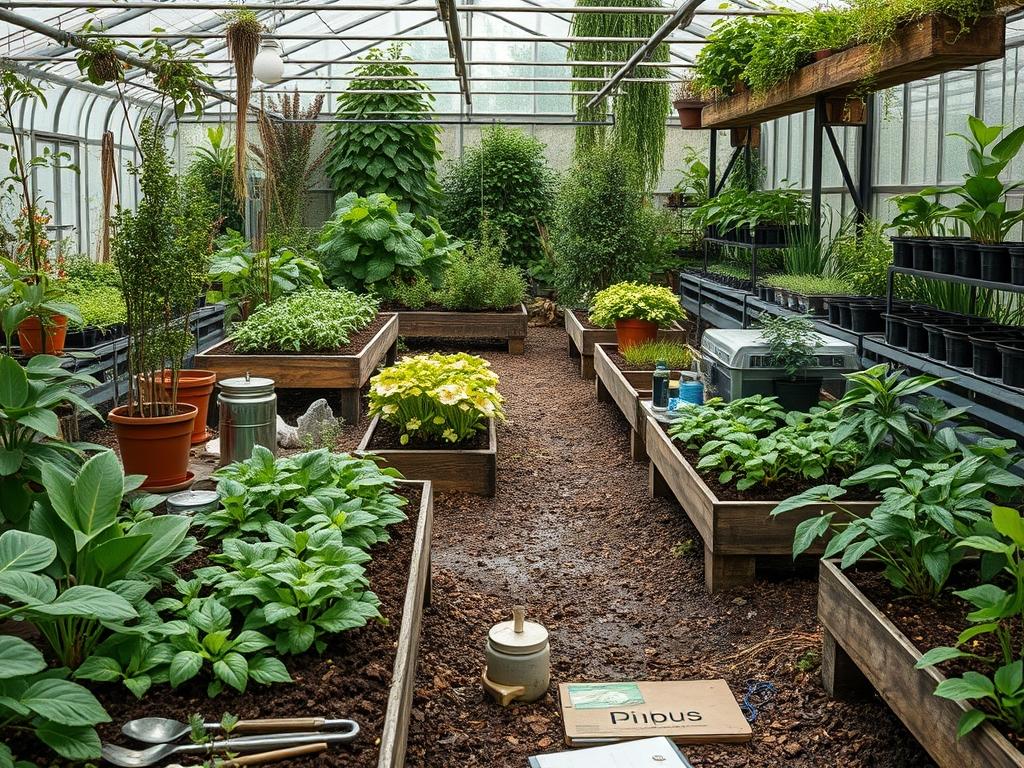
Every professional landscape begins with the structural integrity of its components, where the transition from a conceptual blueprint to a thriving outdoor environment depends heavily on the health of the foundational stock. For many high-end residential projects, the vision includes specific cultivars and rare perennials that are often not available in bulk from local wholesalers. This necessitates starting plants from seed within a controlled environment. However, the greatest threat to this early stage of development is a group of fungal pathogens that cause a condition known as damping off. Preventing Damping Off is critical for indoor seed success because once the disease takes hold in a 10×20 flat or a plug tray, it moves with devastating speed; it can wipe out an entire season of foundational plantings in less than forty eight hours. Landscape architects must view the propagation phase as the first stage of site preparation. If the seedlings are compromised by weak stems or fungal infection, the eventual curb appeal and outdoor functionality of the design will suffer. A landscape is only as resilient as the root systems that support it. Ensuring these plants enter the outdoor environment with vigorous, disease-free stems is the primary objective of any sophisticated planting strategy.
Landscape Design Principles
Executing a master plan requires a deep understanding of visual weight and structural balance. Symmetry often dictates the formal entryways of a property, where matching specimens of Buxus sempervirens or Taxus x media provide a sense of permanence and order. When designing these spaces, we look at the elevation layers; this involves a foreground of low-growing perennials, a mid-ground of structural shrubs, and a background of canopy trees. This layering creates depth and prevents the landscape from feeling two-dimensional.
Focal points are strategically placed to draw the eye toward architectural features or natural vistas. This might be a custom-carved stone water feature or a single, specimen-grade Acer palmatum. Beyond the aesthetics, irrigation planning is a fundamental design principle. We group plants by their water requirements, a practice known as hydro-zoning, to ensure that the moisture levels suitable for Hydrangea macrophylla do not drown more drought-tolerant species like Lavandula angustifolia. Walkways and hardscapes serve as the skeletal structure, providing clean lines that contrast with the organic textures of the foliage. Visual balance is achieved by mirroring shapes and textures across a central axis, even in more naturalistic, informal designs.
Plant and Material Selection
Selecting the right material is a balance of aesthetic desire and environmental reality. The following table outlines several species frequently used in professional designs that are often started from seed to ensure quantity and quality control.
| Plant Type | Sun Exposure | Soil Needs | Water Demand | Growth Speed | Maintenance Level |
| :— | :— | :— | :— | :— | :— |
| Echinacea purpurea | Full Sun | Well-drained | Low | Moderate | Low |
| Lupinus perennis | Full Sun / Part Shade | Sandy/Acidic | Medium | Fast | Moderate |
| Lobelia cardinalis | Part Shade | Moist/Organic | High | Moderate | High |
| Andropogon gerardii | Full Sun | Adaptable | Low | Fast | Low |
| Nepeta fassenii | Full Sun | Well-drained | Low | Fast | Low |
| Heuchera micrantha | Shade / Part Sun | Rich/Humus | Medium | Slow | Moderate |
When selecting materials for the propagation phase, we prioritize sterile mediums. Using Sphagnum peat moss, Perlite, and Vermiculite allows for a controlled environment that is free from the pathogens found in garden soil. For hardscaping, we specify Crushed granite, Flagstone, and Pressure-treated timber to ensure longevity and structural stability.
Implementation Strategy
The successful implementation of a garden layout begins with site preparation and grading. We first establish the finish grade to ensure that water moves away from the building foundations at a minimum slope of 2 percent. Once the grading is verified, we mark the beds using marking paint and landscape stakes.
The next step is the installation of the irrigation system, which is hidden beneath the soil surface. We use Point-source drip emitters for larger shrubs and In-line drip tubing for densely planted perennial beds. After the irrigation is tested, we begin the planting process. Each hole is dug to twice the width of the root ball but no deeper than the original container depth to prevent crown rot.
Preventing Damping Off during the transition period is vital. As indoor seedlings are moved outdoors, they undergo a process called hardening off. We introduce them to the elements in increments of two hours per day, gradually increasing exposure over a week. Once in the ground, we apply 3 inches of hardwood mulch to regulate soil temperature and retain moisture. Edging is then installed, using steel edging or poured concrete curbs, to create a crisp definition between the turf and the planting beds.
Common Landscaping Failures
The most frequent failure in professional landscaping is poor drainage. When water pools around the root zone, it deprives the plant of oxygen and creates an ideal environment for soil-borne pathogens. This is functionally the outdoor version of damping off, where root rot leads to the eventual collapse of the specimen. Proper Grading and the installation of French drains or Catch basins are the primary solutions for this issue.
Another common mistake is root overcrowding. Designing for the “immediate look” often leads to planting species too close together. Within five years, these plants compete for nutrients and light, leading to stunted growth and increased susceptibility to pests. Improper spacing also restricts airflow, which is a major factor in fungal outbreaks.
Soil compaction is a hidden killer in many new construction sites. Heavy machinery compresses the soil, destroying the pore space necessary for root expansion. We mitigate this by using a Mechanical tiller or an Air spade to incorporate Organic compost and Expanded shale into the site. Finally, irrigation inefficiencies, such as overwatering via high-pressure spray heads, can lead to foliar diseases and wasted water. Transitioning to a Smart irrigation controller with weather-based adjustments is the professional standard for avoiding these pitfalls.
Seasonal Maintenance
Landscape management is a year-round commitment that changes with the solar cycle. In the spring, the focus is on reactivation. This includes removing Winter mulch, pruning dead wood from deciduous shrubs, and applying a Pre-emergent herbicide to prevent weed seeds from germinating. This is also the time to test the irrigation system for leaks caused by freeze-thaw cycles.
Summer maintenance centers on moisture management and deadheading. During periods of extreme heat, we monitor the Soil moisture sensors to ensure the drip system is delivering adequate water. Deadheading spent blooms on species like Salvia or Coreopsis encourages a second flush of flowers and maintains a clean aesthetic.
Autumn is the season for renovation and preparation. We plant Spring-flowering bulbs and apply a Slow-release fertilizer with a high potassium content to encourage root development before the ground freezes. We also perform a final cleanup of fallen leaves to prevent them from matting down and smothering the turf or perennials.
Winter is the time for structural pruning and protection. We prune Late-summer flowering shrubs while they are dormant and wrap sensitive species in Burlap to protect them from desiccating winds. For the indoor propagation area, winter is the peak season for Preventing Damping Off as we start the next cycle of seeds. We maintain a constant temperature of 70 degrees Fahrenheit and use Oscillating fans to keep the air moving, ensuring that the next generation of landscape plants is healthy and ready for spring installation.
Professional Landscaping FAQ
How do I prevent damping off in my indoor seed trays?
Preventing Damping Off requires using a sterile, soilless seed-starting mix and providing excellent airflow. Avoid overwatering; keep the surface of the medium slightly dry between waterings. Ensure that your Seed trays and Tools are disinfected with a 10 percent bleach solution.
What is the best way to handle poor drainage in a backyard?
The most effective method is to adjust the grade to direct water toward a Drainage swale or a Dry creek bed. If the soil is heavy clay, incorporating Organic matter or installing a French drain system with Perforated pipe will significantly improve the situation.
How deep should my landscape mulch be?
A depth of 2 to 3 inches is ideal for most planting beds. This is thick enough to suppress weeds and retain moisture without suffocating the root systems. Always keep mulch at least 2 inches away from the trunks of trees and shrubs.
When is the best time to plant new trees and shrubs?
Early spring and late autumn are the optimal times. These windows allow the plants to establish root systems in cooler temperatures without the stress of summer heat. Planting in autumn is particularly beneficial for root growth before the winter dormancy period.
Why are my seedlings falling over at the base of the stem?
This is the classic symptom of damping off caused by fungi like Pythium or Rhizoctonia. The stem becomes pinched and turns brown at the soil line. To stop it, improve ventilation and reduce humidity immediately; unfortunately, infected plants cannot be saved.